While glass feels perfectly smooth, at a microscopic level, its surface is porous and jagged. Understanding the chemistry of water interaction is key to maintaining architectural glass without causing permanent substrate damage.
Stage 1: Mineral Adhesion (Hard Water Spots)
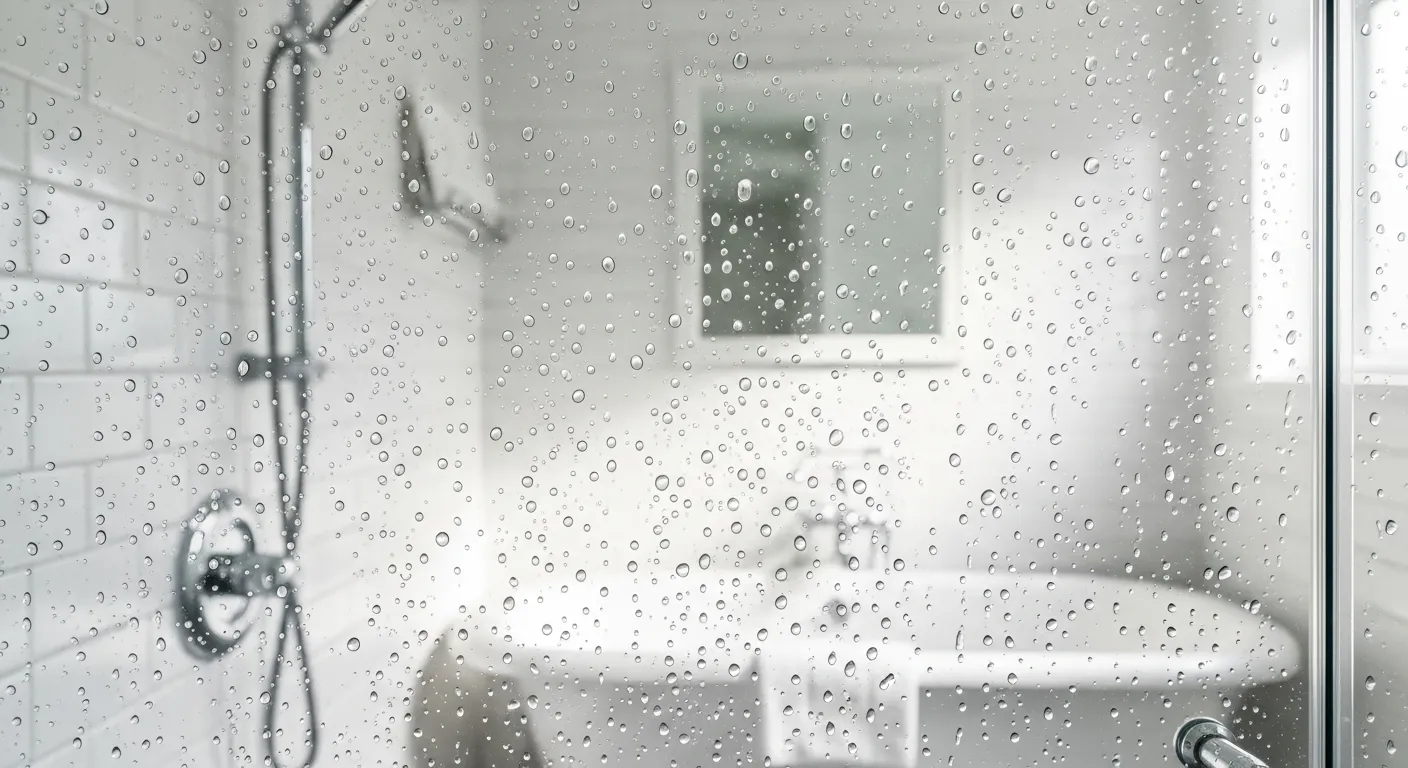
Tap water contains dissolved calcium and magnesium. As water evaporates on untreated shower glass, it leaves these alkaline minerals trapped in the microscopic pores. This presents as cloudy, white spotting.
The Scientific Solution: Alkaline deposits require an acidic solvent. A 1:1 mixture of warm acetic acid (white vinegar) and a surfactant (dish soap) breaks down the bonds. Crucially, this must be applied with non-abrasive microfiber—never scouring pads, which will physically scratch the glass.
Stage 2: Silica Etching (Permanent Damage)
If mineral deposits are left untreated for months or years, a chemical reaction occurs. The alkaline minerals begin to physically eat into the silica structure of the glass itself. This is known as etching or Stage 2 corrosion.
The Reality: Once glass is etched, no amount of chemical cleaning will restore it, as the glass surface has been permanently eroded. It can only be resolved via mechanical restoration (professional machine polishing) or complete replacement.
Hydrophobic Surface Treatments
The modern glazing standard for preventing mineral adhesion is the application of hydrophobic (water-repelling) polymers or silane-based nano-coatings.
Treatments like EnduroShield chemically bond with the glass silica, filling the microscopic valleys and creating a smooth, non-stick barrier. Water beads up and rolls off rather than evaporating in place. We highly recommend specifying protective coatings during the initial fabrication phase for all custom shower installations.
Expert Consultation
Require engineering assessment for a structural glass project in British Columbia? Our glazing experts are ready to assist.
Contact Engineering